

The storm hits overnight. By morning, the grid is down across your zip code. Your competitors are dark. But your building has power, refrigeration is running, security is live, and your team can work.
That’s not luck. That’s what happens when a commercial solar system is built for Florida, not just installed in it.
Most solar companies don’t make that distinction. They design for minimal code, hand the job to a subcontractor, and move on until the first major storm puts the system to the test.
Key Takeaways
- Commercial solar systems across the Gulf Coast are built to withstand wind loads of 130 to 140 mph, not just meet minimum code requirements.
- Low-profile racking and sealed wiring separate systems that survive from systems that don’t.
- Solar with battery storage keeps your business running when the grid is down for days.
- In-house, veteran-trained crews build systems that hold. Subcontracted ones often don’t.
The real cost of getting this wrong
A solar system that fails in a hurricane doesn’t just stop producing power. It becomes a problem. Panels that tear loose damage the roof. Compromised wiring creates fire risk. An inverter flooded with water is destroyed.
By the time you add emergency repairs, insurance claims, and days of downtime, a poorly installed system has cost far more than it ever saved. The question on Florida’s Gulf Coast isn’t whether your system will face a major storm. The question is whether it was built to come out the other side.
What goes wrong with standard solar
The real problems usually come from poor installation and one-size-fits-all designs. Many companies use the same setup everywhere, without considering Florida’s weather. But Florida is different. Florida’s humidity affects poorly sealed parts, and strong coastal winds put extra stress on the system. A setup that works somewhere else may not last long here.
High-Wind solar protection for Florida businesses
Florida solar systems must handle strong winds, heavy rain, humidity, and hurricanes. In many parts of the state, commercial systems may need to withstand wind speeds of up to 140 mph under Florida building codes.
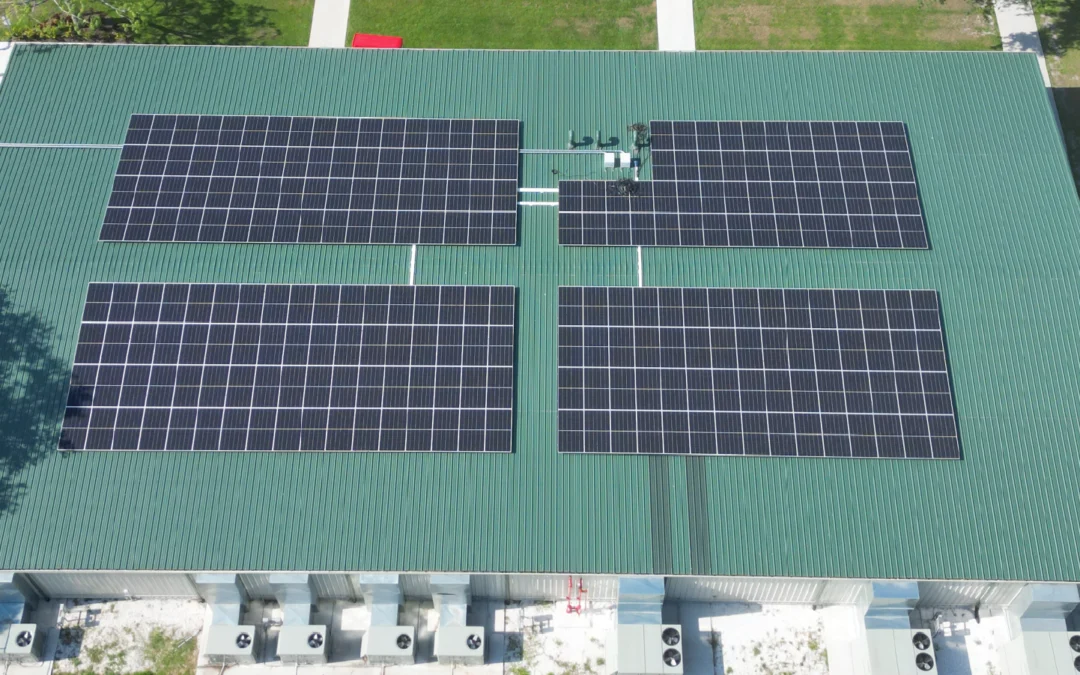
- Low-profile panel mounting: The smaller the gap between panel and roof, the less wind gets underneath. It is one of the most commonly skipped steps in commercial solar.
- Sealed wiring throughout: Wind-driven rain finds every unsealed gap. Conduit paths, junction boxes, and roof penetrations must be weatherproofed for rain coming from multiple directions.
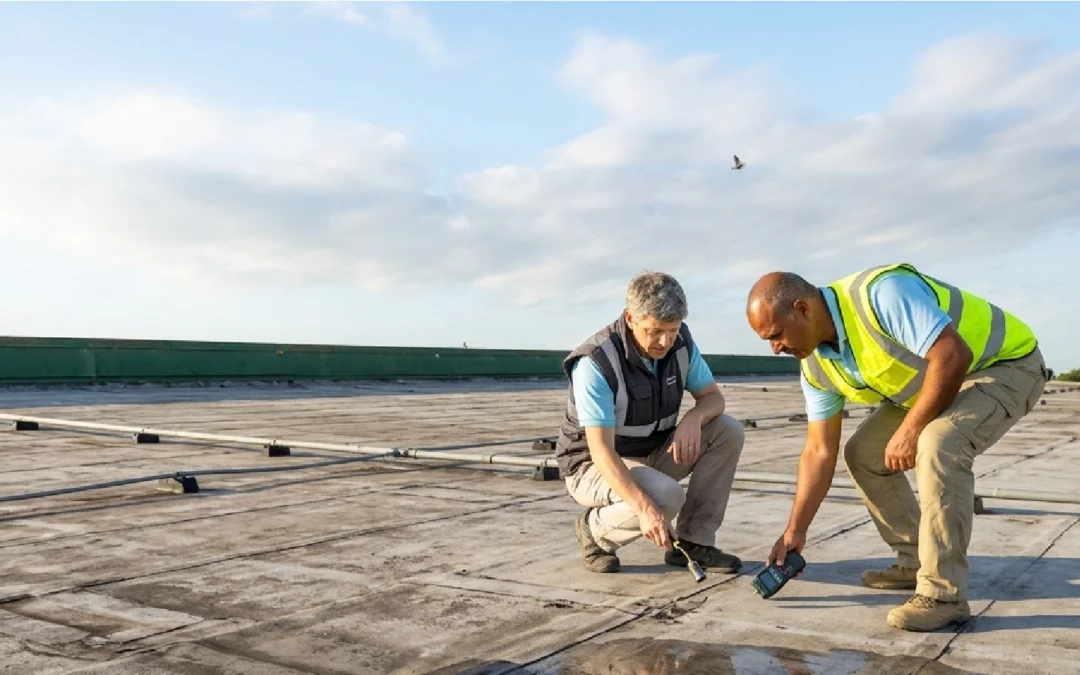
- Roof assessment before anything goes up: An aging or compromised roof under a new solar array in a hurricane zone is a liability waiting to happen. Any crew that skips this step is cutting a corner the building owner will eventually pay for.
When the grid goes down
Florida outages after major storms don’t last hours, they last days. For any commercial operation, whether it’s a restaurant, a medical office, farms, a cold storage facility, or retail, every hour without power has a dollar amount attached to it.
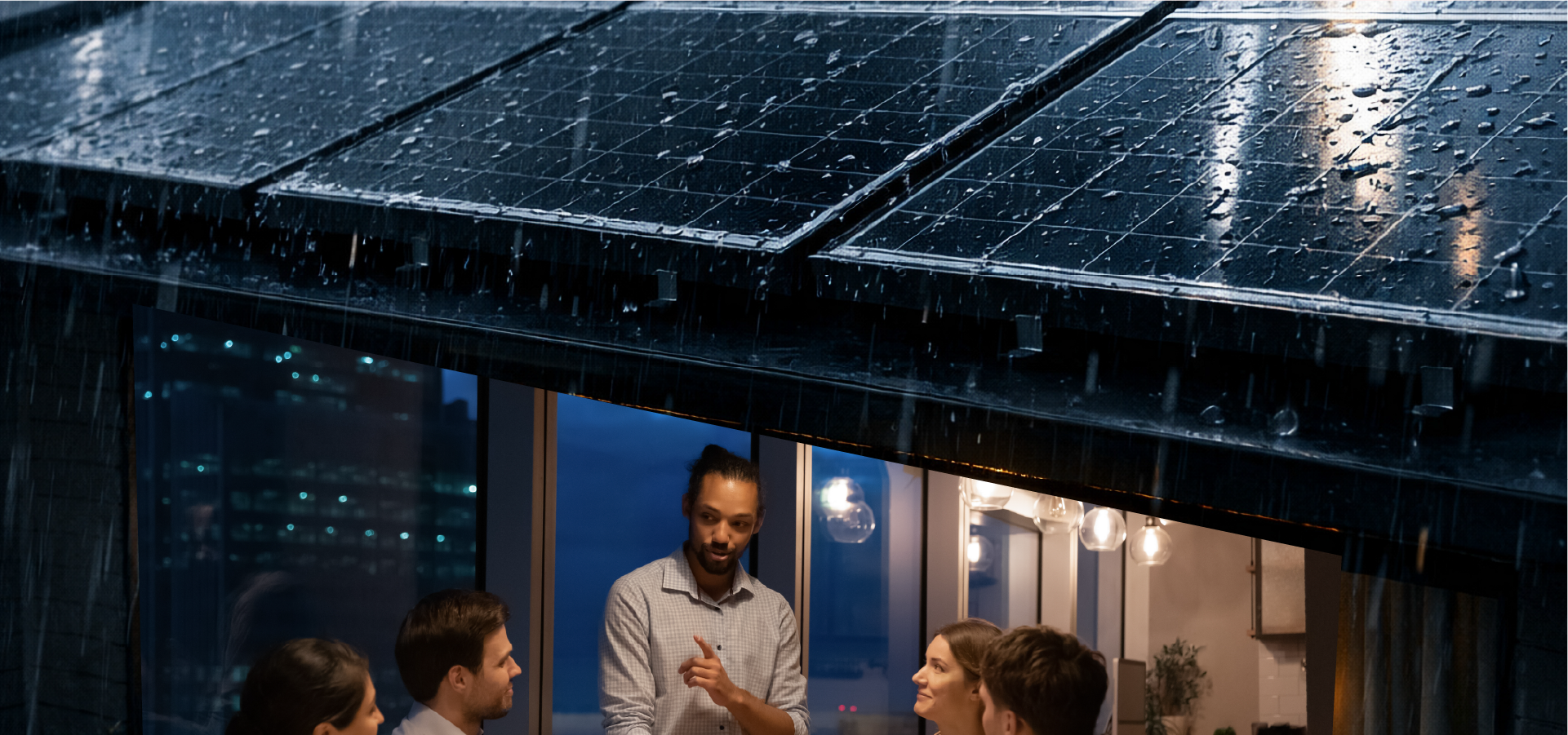
Solar paired with battery storage changes that calculation entirely. Refrigeration stays on. Security runs. Point-of-sale systems work. You’re not waiting on the utility company. You’re open while the businesses around you are closed.
The team behind every install
“Veteran-trained, in-house American crews run every Tampa Bay Solar project with no subcontractors, no outsourced installs, and no templated approach, just systems built specifically for Florida conditions.
The team includes a former NOAA hurricane pilot who tracked Gulf Coast storms firsthand, as well as leadership with backgrounds in applied physics and structural engineering. That knowledge is built into every system designed and installed on a Florida rooftop.
Florida exposes every shortcut eventually. The installs that last are built by people who already know what is coming. Not ready for the next hurricane season? Start with a free on-site consultation.
Our Service Areas
Hillsborough County: Tampa, Brandon, Riverview, Valrico, Plant City, Apollo Beach, Sun City Center
Pinellas County: St. Petersburg, Clearwater, Largo, Pinellas Park, Dunedin, Tarpon Springs, Seminole
Manatee County: Bradenton, Palmetto, Lakewood Ranch, Ellenton, Holmes Beach
Sarasota County: Sarasota, Venice, North Port, Osprey, Nokomis, Englewood
Pasco County: Wesley Chapel, New Port Richey, Zephyrhills, Dade City, Land O’ Lakes, Hudson