
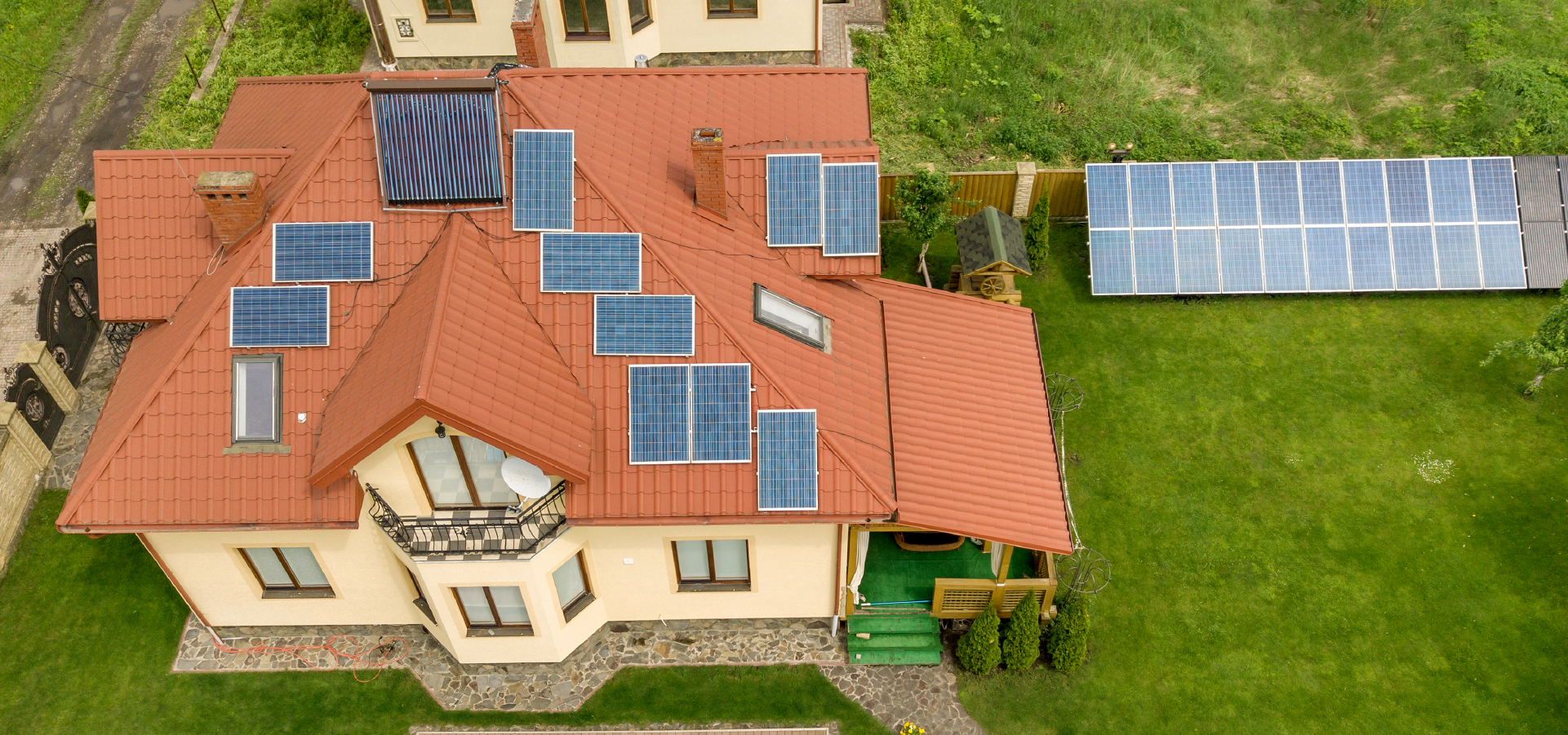
Where you install your solar panels matters. You can choose rooftop or ground-mount solar based on your home, sunlight, and available space.
Rooftop solar can cost less since you can use the roof as the mounting base. Ground-mount solar needs extra work, such as footings and trenching. Both need permits. Ground-mount panels are also easier to clean and repair. If you replace the roof later, you may need to remove the rooftop panels first.
Key takeaways
- Check your roof’s age and condition before installing solar panels.
- Ground-mount solar needs enough open space.
- Solar systems must meet Florida’s building and wind requirements.
- Local rules and your property can affect which solar option works best.
Start with your roof
If you are considering rooftop solar, start by checking your roof.
Solar panels can last 25 years or more, so make sure your roof is in good condition before installation. If your roof needs major work soon, it may be better to address that first.
Roof age is only one factor. Its condition, structure, available space, and the property itself can also affect your solar options.
When should you re-roof first?
If your roof is near the end of its expected life or will need replacing in the next few years, replace it before installing solar. This helps you avoid removing the panels later. A site assessment can confirm your roof’s condition.
How much yard space do you have?
Ground-mount solar offers another option when the roof isn’t the best location for the panels.
Instead of using roof space, you install the panels on a racking structure in your yard. This can be useful when the roof has limited usable space, shading, or other features that make a rooftop layout less practical.
But a large yard does not automatically mean a ground-mount system will work.
You need enough space for the array and equipment, with good sun and easy access.
If you are planning a pool, addition, outdoor kitchen, or other backyard project, the location of a ground-mount system could affect those plans.
What does wind code have to do with solar?
In Florida, wind is an important factor when planning a solar system. Both rooftop and ground-mount systems must meet Florida Building Code wind and safety requirements. The best option depends on your property, location, and system design.
The 8th Edition (2023) Florida Building Code applies until the 9th Edition (2026) takes effect on December 31, 2026. Local rules can also affect permitting.
When rooftop solar makes sense
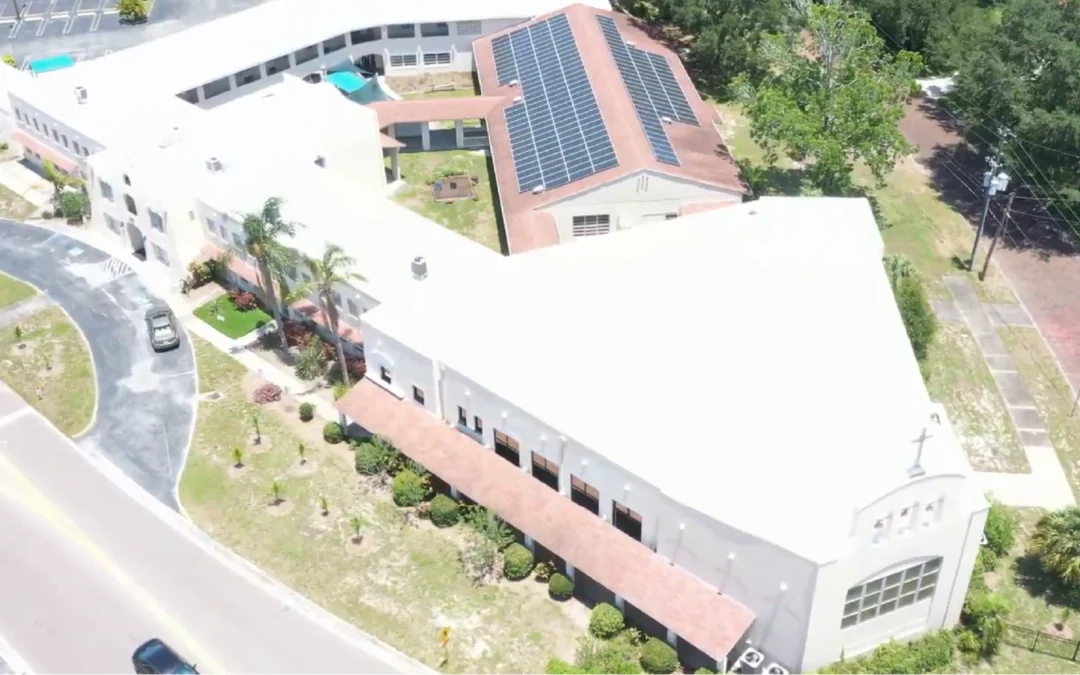
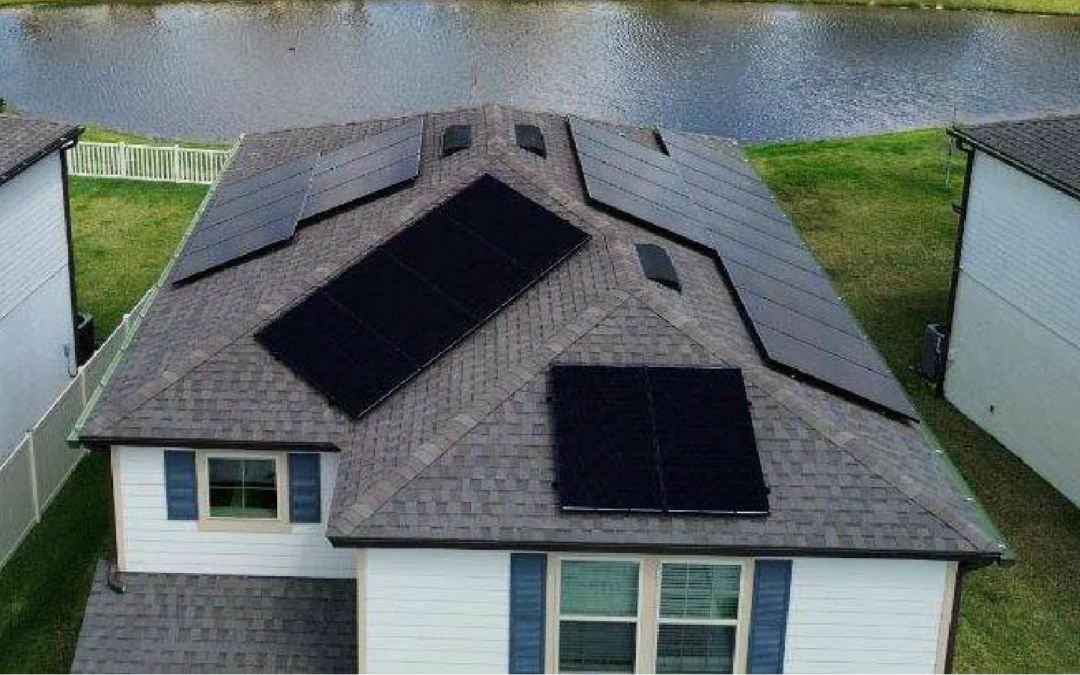
Rooftop solar can be a practical choice when your roof has enough usable space and good sun exposure. The roof should also be checked for things that can affect the layout, such as:
- Roof age and condition
- Roof orientation and pitch
- Trees and other sources of shade
- Vents, chimneys, and other roof features
- Available space for the number of panels needed
A roof can look large from the ground but offer less usable space once you consider these factors.
When ground-mount solar makes sense
Ground-mount solar can be a good option if you have enough open space and your roof isn’t the right place for solar panels.
The tradeoff is that the system uses part of your yard. You will need to think about landscaping, access, future construction, and how you currently use the space.
Before choosing a location, make sure the area you are considering is not needed for another project you have planned for the property.
Which option should you choose?
Start with your property, not the mounting type. Ask these questions:
How old is my roof?
If the roof may need major work soon, consider that before installing rooftop solar.
How much usable roof space do I have?
Total roof area doesn’t equal the area available for solar panels.
Do I have enough suitable yard space?
Ground-mount solar needs more than an open-looking area. The location should also fit the equipment and allow easy access.
What does my site assessment show?
Sun exposure, shading, roof condition, property layout, structural considerations, and local requirements can all affect the decision.
Book a free site assessment with Tampa Bay Solar to find the right solar setup for your property.
FAQ
What if my roof is in good shape but is getting older?
An older roof does not automatically rule out rooftop solar. Consider the roof’s condition and expected remaining life before installation.
Will ground-mount solar take up my entire yard?
Not necessarily. It depends on the system size, available space, shade, and local requirements.
Can I install ground-mount solar if I have trees in my yard?
Possibly. Trees can create shade, so their location should be considered when choosing the best spot for your solar system.
What happens if I need to replace my roof after installing solar?
The solar equipment needs to be removed and reinstalled during the roofing work. Planning the roof and solar projects together can help avoid unnecessary work.
Our Service Areas
Hillsborough County: Tampa, Brandon, Riverview, Valrico, Plant City, Apollo Beach, Sun City Center
Pinellas County: St. Petersburg, Clearwater, Largo, Pinellas Park, Dunedin, Tarpon Springs, Seminole
Manatee County: Bradenton, Palmetto, Lakewood Ranch, Ellenton, Holmes Beach
Sarasota County: Sarasota, Venice, North Port, Osprey, Nokomis, Englewood
Pasco County: Wesley Chapel, New Port Richey, Zephyrhills, Dade City, Land O’ Lakes, Hudson